
25 Years of Experience With Hidden Moisture
Our team has spent 25 years working on water losses in homes and businesses. We know how water moves through walls, ceilings, and floors, and where it hides after the visible puddle is gone.
San Diego Water Damage provides water damage restoration for homes and businesses in San Diego, California. We remove standing water, dry wet materials, clean up contamination, and explain the repairs that come next after burst pipes, leaking appliances, roof leaks, sewage backups, and indoor flooding.
Water damage restoration works best when it starts early. Water that stays in drywall, insulation, and subfloors can weaken materials and hold moisture after the surface looks dry. In San Diego’s mild coastal climate, winter storms and marine-layer humidity can slow drying, so damp materials often need controlled airflow and dehumidification.
Every job starts with an assessment to find the water source and check for moisture you can’t see. If water is still entering your property, call San Diego Water Damage Restoration for emergency water damage help.
Water damage is stressful, and the first hours matter. Here is what you can expect when you call us.
Our team has spent 25 years working on water losses in homes and businesses. We know how water moves through walls, ceilings, and floors, and where it hides after the visible puddle is gone.
We check wet areas with moisture meters and other detection tools. Those readings guide where we place equipment and when a structure is actually dry.
Each project follows a restoration plan based on the type and extent of damage. We explain what can be dried, cleaned, repaired, or replaced, and why, in plain language.
We protect occupied spaces and personal items while we work. We also document the damage and the recommended work, which helps when you talk with your insurance provider.
Tell us what happened, and we'll talk through your options.
Discuss Your Water Damage Cleanup NeedsWater damage restoration is the full recovery process after unwanted water enters a building. It covers assessment, water removal, drying, cleaning, and repairs. The right mix of services depends on the water source, contamination level, and materials involved. A supply-line leak in one room needs a different plan than a storm-driven roof leak that soaked several rooms.
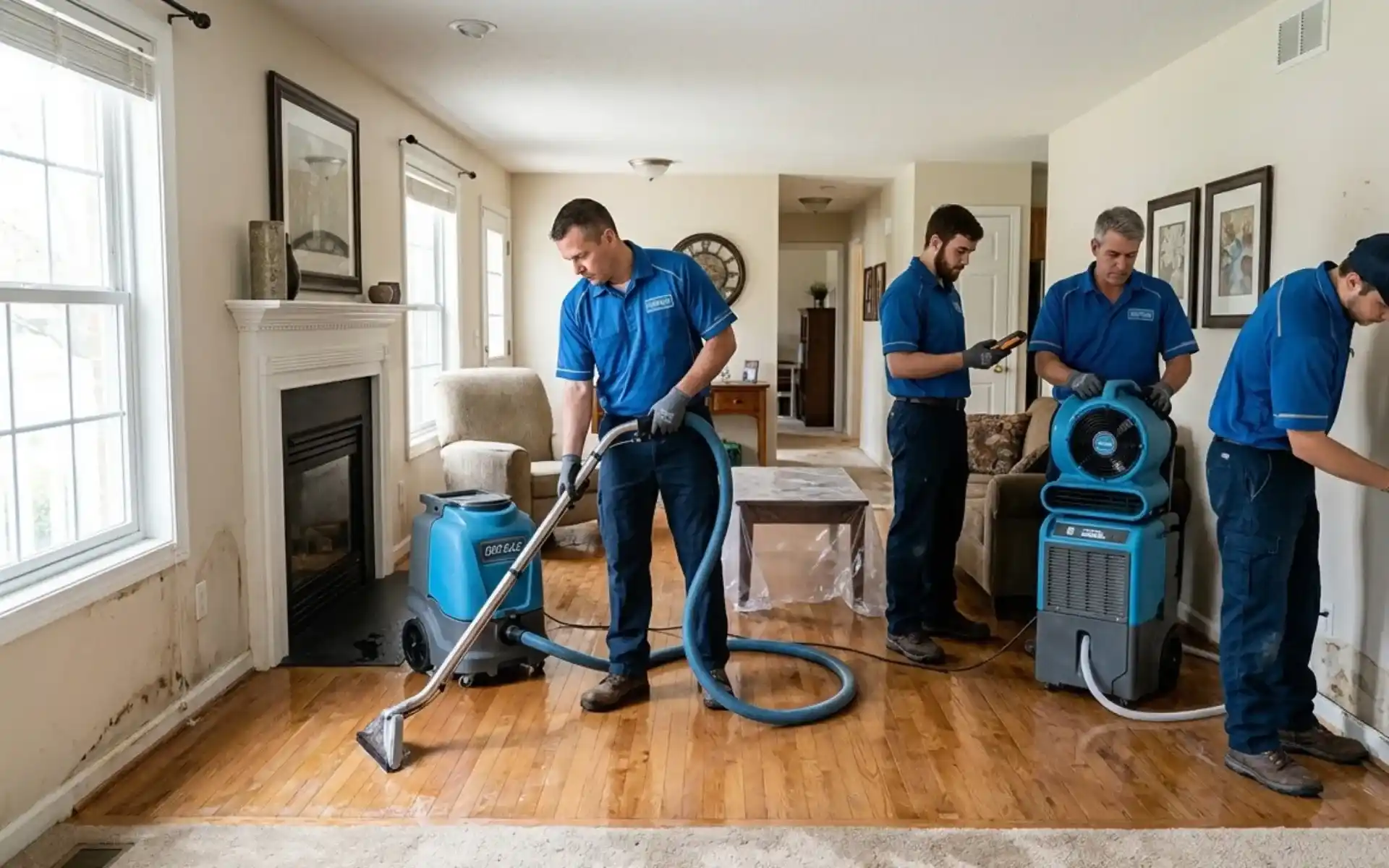
Water damage restoration is the full recovery process after unwanted water enters a building. It covers damage assessment, water removal, drying, cleaning, and coordination of repairs. The scope depends on the source of the water, how contaminated it is, which materials were affected, and how far the water spread. A supply-line leak in one room calls for a different plan than a storm-driven roof leak that soaked several rooms. We start by documenting what's wet, then build a plan that dries what can be dried, cleans what needs cleaning, and identifies what must be repaired or replaced before reconstruction begins.
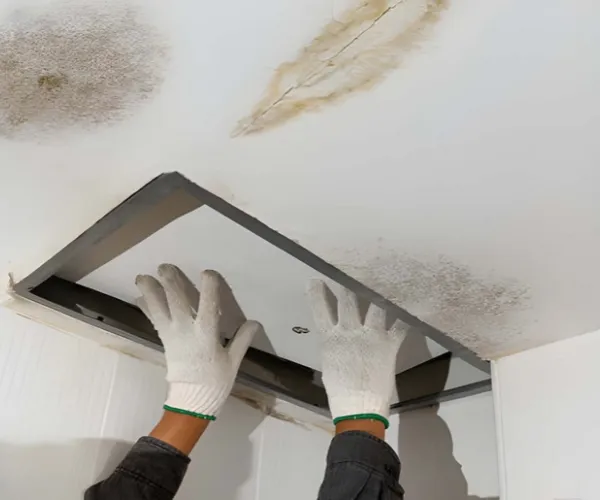
Water damage repair begins once the water source has been controlled and the affected areas have been assessed. Repairs may involve drywall, flooring, baseboards, cabinetry, insulation, and paint. The key decision is what to dry and what to replace. Materials like tile and some solid wood often dry successfully, while saturated drywall, carpet padding, and swollen particleboard cabinetry frequently can't be restored reasonably. We explain which materials fall into each group and why, so repair decisions rest on moisture readings and material condition.
Learn More →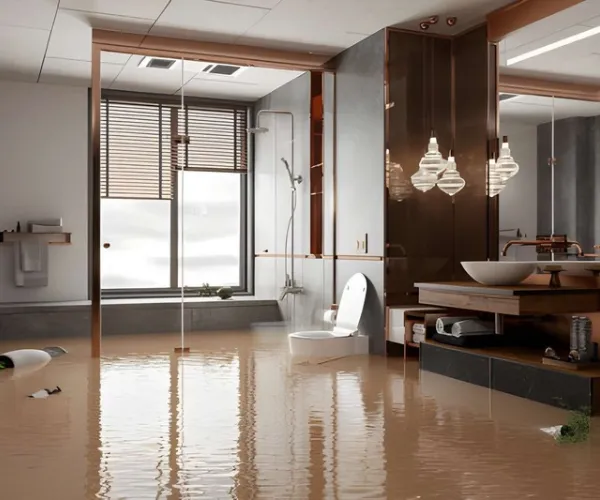
Flood damage restoration addresses cleanup after indoor flooding, stormwater intrusion, or large accumulations of water. These events can leave debris, silt, damaged contents, and moisture trapped inside floors and wall cavities. Not every flood involves the same level of contamination. Water that entered from outdoors or through a drain may carry contaminants, which changes how materials are handled, cleaned, and sanitized. We assess the water source first, then remove water and debris, separate salvageable contents from damaged ones, and dry the structure before repairs begin.
Learn More →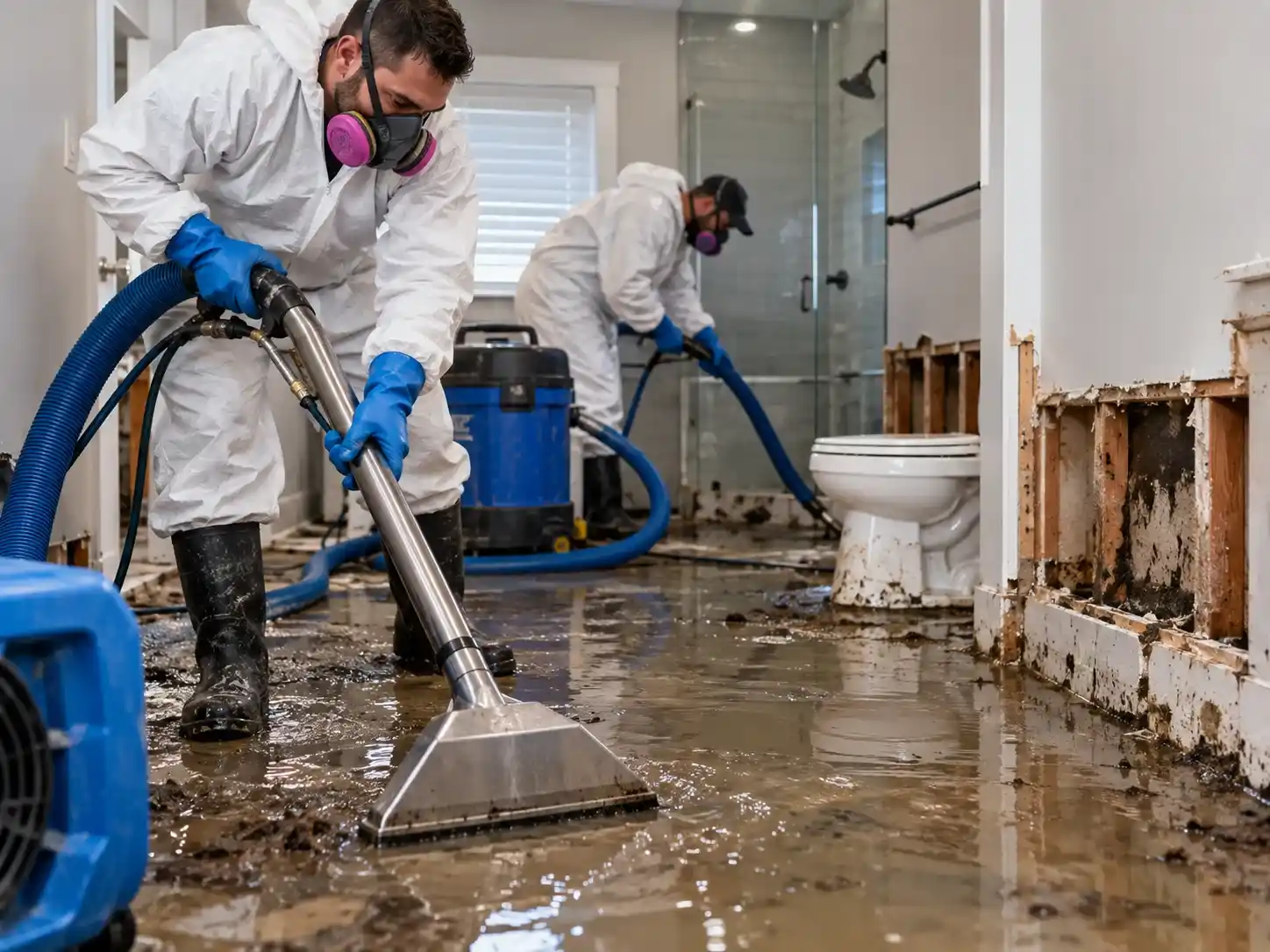
Sewage cleanup covers sewer backups, toilet overflows involving contaminated water, and other incidents where wastewater enters a property. Sewage carries bacteria and other contaminants, so homeowners shouldn't handle it themselves. Our work focuses on contamination control, removal of porous materials that can't be adequately cleaned, thorough cleaning, and sanitation of affected surfaces. We work to keep contamination from spreading to unaffected rooms and explain which materials need to come out. If you suspect a sewage backup, keep people and pets away from the area and call us.
Learn More →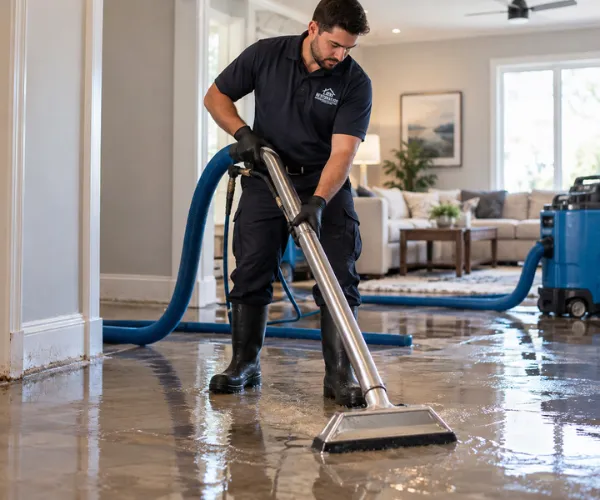
Water extraction is the removal of standing and pooled water from a property, and it's one of the most important early steps in restoration. We use pumps and extraction equipment to remove accessible water from affected rooms, carpet, flooring, and other areas. Extraction reduces the moisture the structure has to release later, which supports drying. But removing visible water doesn't mean the building is dry. Moisture often remains in subfloors, wall cavities, and framing, which is why extraction is followed by structural drying and moisture checks.
Learn More →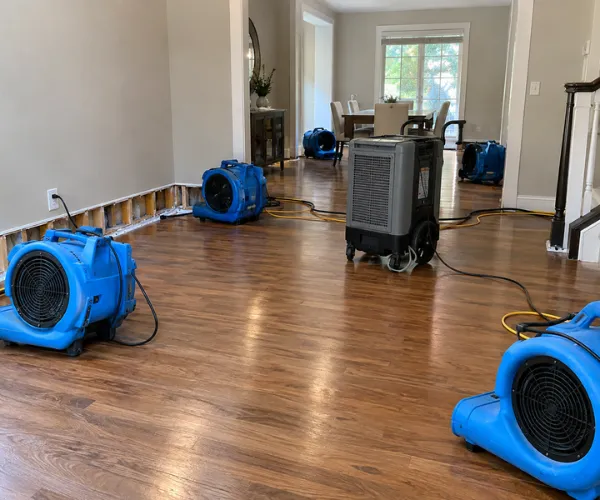
Structural drying is the controlled drying of building materials after water has been extracted. It uses professional air movement and dehumidification to pull moisture out of drywall, framing, subfloors, and other materials, with moisture meters guiding the work. We adjust equipment placement and drying decisions based on readings from the materials themselves. Drying time varies with how saturated the materials are, what they're made of, and conditions on site, so we don't promise a fixed timeline. We monitor progress and check that materials have reached appropriate drying goals before the work is considered complete.
Learn More →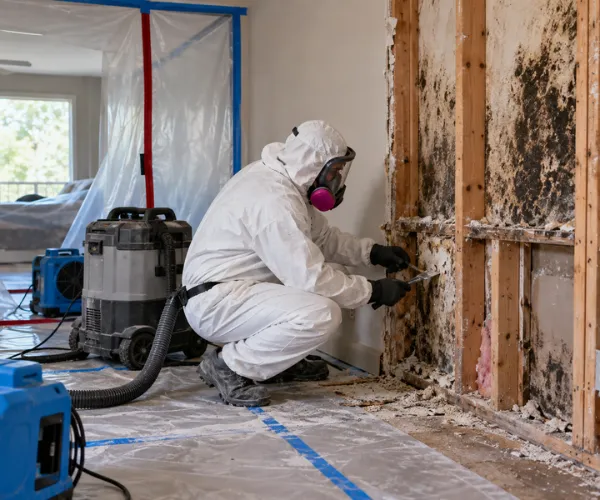
Mold remediation addresses mold growth that's present or suspected after a water event. Moisture control comes first, because mold needs moisture to grow. Where mold is found, we assess the affected area, set up containment to limit its spread, and clean or remove affected materials as appropriate. We also work to identify and correct the underlying moisture problem. Not every leak leads to mold, and no company can promise it will never return, but prompt, thorough drying reduces the damp conditions that support growth.
Learn More →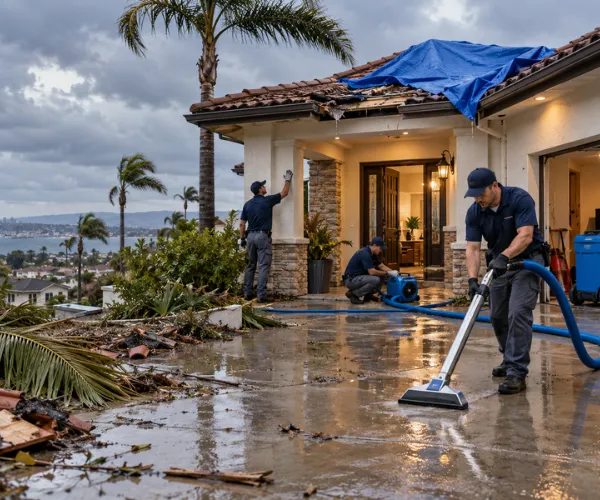
Our storm damage restoration services in San Diego help homeowners and businesses recover from heavy rain, strong winds, roof leaks, and flooding. We provide thorough damage assessments, professional water extraction, structural drying, and restoration solutions to address affected areas. Our goal is to minimize further damage, protect your property, and help restore safe, comfortable living and working conditions.
Learn More →See how water-damaged spaces can change throughout the restoration process. Explore our project comparisons to understand the work involved in water extraction, structural drying, cleanup, and property repairs.


A San Diego homeowner discovered water spreading across the kitchen floor after a supply line beneath the sink began leaking. Moisture had reached the lower cabinets, baseboards, and nearby flooring, creating concerns about hidden damage.
The restoration process began with an inspection to identify affected areas. Standing water was extracted, damaged materials were evaluated, and drying equipment was used to reduce trapped moisture. Once drying was complete, affected cabinetry, flooring, and baseboards were repaired or replaced as needed.
The result was a clean, dry, functional kitchen, illustrating how a structured restoration process can help recover a water-damaged home.
Water damage restoration follows a repeatable workflow, so you know what to expect after you call. Each step builds on the last, from finding where the water went to confirming that building materials have actually dried and reviewing what comes next.
We start by finding the water source and the full extent of the intrusion. That means identifying affected materials, evaluating possible contamination, and checking for moisture beyond the visibly wet areas, using moisture meters and other detection tools where appropriate. Water often travels into wall cavities, under flooring, and across ceilings. Once the assessment is complete, we explain what we found and outline the restoration steps that suit your situation.
Next, we remove standing water and accessible excess moisture using suitable pumps and extraction equipment. Taking out bulk water early reduces how much moisture the structure has to release during drying, which helps the drying phase work more efficiently. Extraction also limits further saturation of carpet, padding, and lower wall sections. The equipment depends on the amount of water, the flooring type, and whether the water is contaminated.
After extraction, we set up drying equipment, manage airflow, and run dehumidification to pull moisture from affected materials. We take moisture readings throughout and adjust equipment as conditions change. Drying is complete when the materials reach appropriate drying goals, not when a set number of days has passed, so the timeline depends on what the readings show. This monitoring helps catch damp spots before materials are closed up or repaired.
Once drying is complete, we update you on the results, any remaining damage, cleaning needs, and repairs or reconstruction that may be needed. We provide documentation of the work and recommend next steps, such as replacing materials that couldn't be restored. We can't guarantee insurance coverage or a specific outcome, but clear records of the damage and the work performed can support your conversations with your insurance provider.
A wet floor does not always mean the same thing. Water may be limited to the surface, or it may move beneath flooring and into the subfloor. Drywall, insulation, cabinets, and wood framing also respond differently to moisture.
San Diego Water Damage provides water damage restoration services throughout San Diego, California, including Chula Vista, CA, El Cajon, CA, La Mesa, CA, Santee, CA, Coronado, CA, National City, CA, Lemon Grove, CA Imperial Beach, CA and surrounding communities. From burst pipes and appliance leaks to unexpected indoor flooding, we help property owners address water damage through extraction, structural drying, and restoration services.
Tell us what happened, where the water is coming from, and which areas are affected. We can discuss the next practical step.
The cost of water damage restoration in San Diego varies based on the severity of the damage, the affected materials, and the work required to return the property to a dry, usable condition. A small, contained leak may require less restoration work than flooding across several rooms.
Every property is different. The following factors help determine the scope and cost of restoration.
The number of affected rooms, spread of moisture, and amount of standing water influence extraction, drying, and cleanup requirements.
Clean-water leaks and sewage backups require different precautions, cleaning methods, equipment, and material handling.
Wet drywall, insulation, flooring, cabinets, and structural components may require drying, cleaning, repair, or replacement.
The need for water extraction equipment, air movers, dehumidifiers, monitoring, and specialized labor affects project costs.
Some homeowners insurance policies may cover certain types of sudden and accidental water damage. Coverage depends on the cause of the damage, policy terms, exclusions, and applicable deductibles. Review your policy and contact your insurance provider to understand potential coverage.
As soon as it’s safe, ideally so wet materials start drying within 24 to 48 hours. Standing water and damp materials keep causing damage, and conditions that support mold can develop if materials stay wet. If the source is still active, shut off the water supply first, but only if you can do it safely.
Drying often takes several days, but timelines vary. The amount of water, the materials involved, and conditions in the building all affect it, and repairs add more time. We call drying complete based on moisture readings, not a calendar, so a firm estimate requires an assessment of your property.
Yes, it can, but it isn’t automatic. Mold needs moisture, and materials that stay damp create conditions for growth. Fast extraction and thorough drying reduce the risk but can’t eliminate it. If you see or smell mold after a water event, have the area assessed before disturbing it.
It may, depending on your policy and the cause. Policies often cover sudden and accidental events, like a burst pipe, but may exclude gradual leaks, poor maintenance, or rising floodwater, which can require separate flood coverage. Contact your insurer promptly, document the damage, and ask what your policy covers.
Sometimes. It depends on how long the materials stayed wet, the water category, and the material itself. Tile and some solid wood often dry successfully, while saturated drywall, carpet padding, and insulation frequently need replacement, especially after contamination. Moisture readings and inspection guide that decision.
Look for musty odors, stains that spread or darken, bubbling or peeling paint, warped or buckling floors, and soft drywall. Water can sit inside wall cavities and under flooring while the surface looks fine. A moisture meter reading is the surest way to confirm it, so schedule an assessment if you notice any of these signs.
Not always. A small clean-water spill on a hard surface that you can dry completely within a day or so may not need a professional. But if water has soaked drywall, carpet, or padding, reached a wall cavity, or was contaminated, moisture can stay hidden. A moisture assessment can show whether professional drying is needed.
Often not, but it depends on the damage. Many clean-water projects allow occupants to stay, though drying equipment can be noisy. You may need to leave if there’s sewage or other contamination, a safety hazard, or if power or water must be shut off. An assessment will show what’s safe for your situation.